
Description
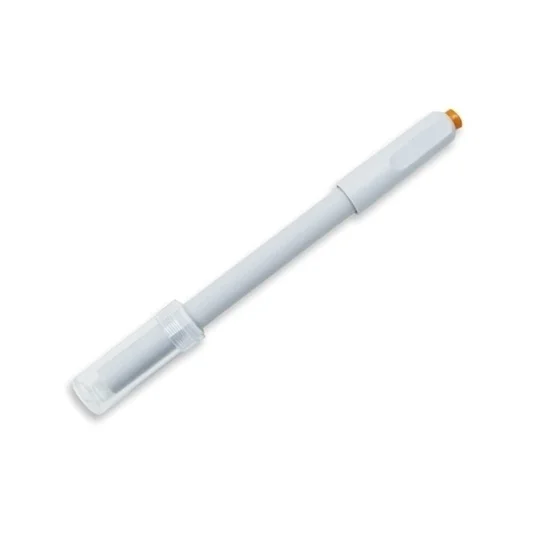
Cyanide ion selective electrode (ISE) uses a salt membrane and plexiglass housing to accurately measure cyanide ion concentrations from 10-6 to 10-2 mol/L in aqueous solutions, ideal for environmental monitoring, water treatment, electroplating, and mining applications.
Specification
| Model | ATO-PCN-1-01 |
| Electrode Type | Single Electrode |
| Ion | Cyanide Ion |
| Standard Solution | KCN Solution |
| Measuring Range | 10-6 – 10-2 mol/L |
| Ionic Strength Adjuster (Powder) | Small Amount of NaNO3 |
| High-end Ionic Strength Regulator | Ionic Strength Regulator TypeⅠ |
| Sensing Membrane Material | Salt Membrane |
| Shell Material | Plexiglass |
| Working Temperature | 5℃–60℃ |
| Interface | BNC (Q9) |
| Dimension | φ12*120mm |
Feature
- Plexiglass Housing: Cyanide ion selective electrode with a durable plexiglass design, used together with a reference electrode for accurate measurements.
- BNC (Q9) Connector: Ensures fast, reliable connection and broad compatibility with most ion meters.
- Highly Selective Salt Membrane: Cyanide ISE is sensitive to cyanide ions for precise and reliable detection.
Size (unit: mm)
Detail
Application
Tips: How should pH be controlled when using a cyanide ion selective electrode?
Maintaining an alkaline pH is critical for accurate cyanide measurements. Cyanide ions (CN–) can easily convert to toxic HCN under acidic conditions, which not only leads to measurement errors but also poses safety risks. To prevent this, the sample solution should be kept alkaline, typically above pH 10, using a suitable buffer. Proper pH control ensures that cyanide remains in its ionic form, stabilizing the ion selective electrode response and improving both precision and reproducibility. For best results, always check the pH before measurement and adjust if necessary.
Reviews
There are no reviews yet.