
Description
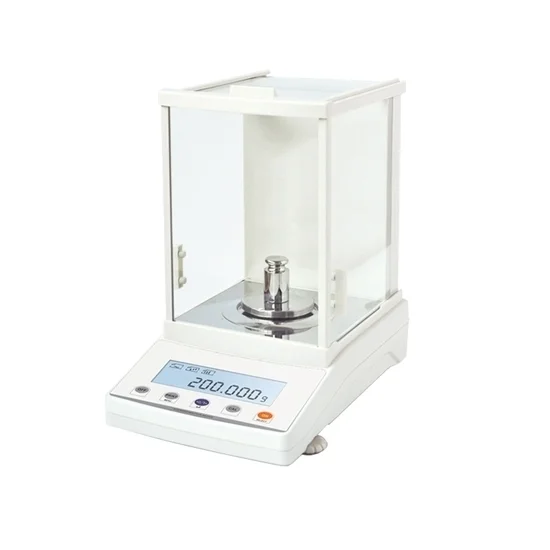
Digital analytical balance is designed to provide accurate and reliable measurements for small samples, typically with a capacity range of 0.1mg to 500g or more, and a readability (also known as the resolution) of 0.1 mg or finer.
Features:
- Screen protective cover. Provide dustproof and stroke prevention; prolong the service life of balance.
- LCD display. LCD monitor, provide abundant weighing display information, convenient to read.
- Casting aluminum shell. Precision cast aluminum case anti-interference, and corrosion-resistant, more accurate weighing.
Specification:
- Model: ATO-JA303
- Capacity: 300g
- Readability: 0.001g
- Min Weighing: 0.004g
- Repeatability: ±0.002g
- Linearity: ±0.003g
- Stable Time: ≤3s
- Pan Size: φ80mm
- Communication: RS232
- Operation Temperature: 15-25 ℃
- Calibration Method: external calibration
- Weight: 10kg
Dimension:
Application:
Tips: What are the Advantages of Electronic Analytical Balance?
- Precision and Accuracy. Electronic analytical balances provide extremely high precision and accuracy in measuring mass. They can typically measure up to three decimal places (0.001 g), ensuring precise results. This level of accuracy is crucial in analytical laboratories where small variations in mass can significantly impact experimental outcomes.
- Speed and Efficiency. Electronic balances offer faster measurement times compared to mechanical balances. They have a quick stabilization time, allowing users to obtain measurements rapidly. This feature enhances efficiency and productivity in laboratory settings where multiple measurements need to be taken in a limited time.
- Stability and Environmental Adaptability. Electronic balances are less sensitive to environmental factors such as air drafts or vibrations, which can affect the accuracy of mechanical balances. They are often equipped with features like adjustable leveling feet, anti-static measures, and draft shields to minimize disturbances and ensure stable measurements.
Reviews
There are no reviews yet.