
Description
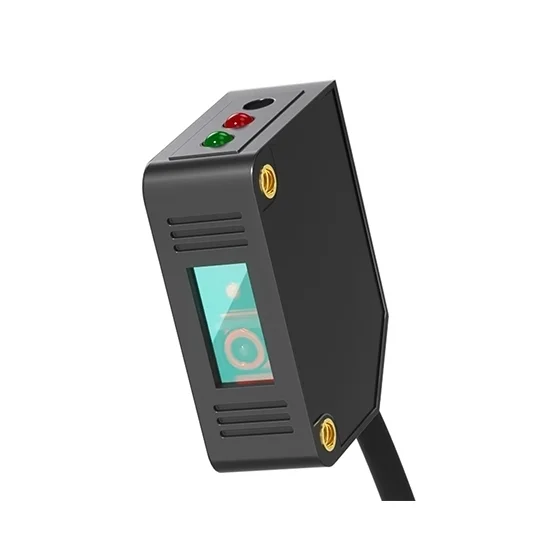
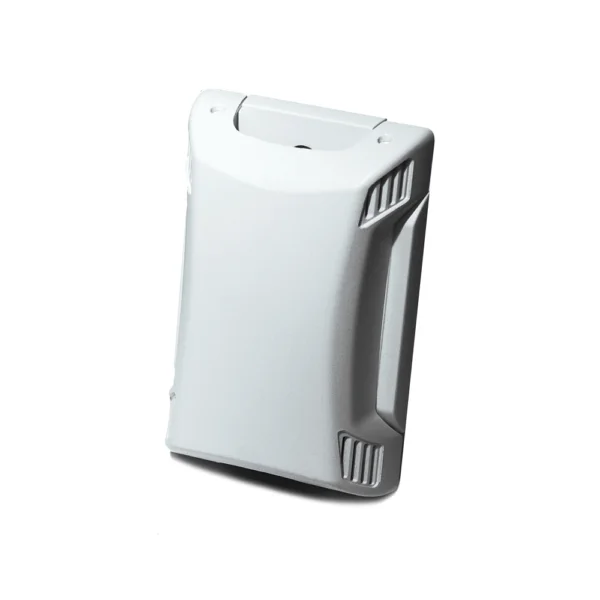
Laser diffuse reflective sensor with 300 mm adjustable detection range and visible red beam for easy installation and precise alignment. Features a coated glass filter to block interference, and a quartz structure for stable, accurate, and reliable detection.
Specification
| Model | ATO-FJNS10-30NF-C | ATO-FJNS10-30PF-C |
| Output Type | NPN | PNP |
| Detection Method | Diffuse Reflective | |
| Detection Distance | 300mm | |
| Detect Objects | Transparent Object, Translucent Object, Opaque Object | |
| Repetition Accuracy | ≤1 mm | |
| Response Time | ≤1 ms | |
| Projection Element | Red Laser | |
| Power Supply Voltage | DC 12–24V ±10%, Ripple (P-P) ≤10% | |
| Consume Current | ≤10 mA | |
| Power supply Reverse Connection Protection | Yes | |
| Output Short Circuit Protection | Yes | |
| Output Reverse Connection Protection | Yes | |
| Anti-interference Function | Equipped | |
| Connection Mode | Lead-out Type (standard lead length 2m) | |
| Weight | 65g | |
| PNP Output Type | PNP Open-collector Transistor | |
| Output Max. Sink Current | 80 mA | |
| Output External Voltage | ≤30 V DC (output–+V) | |
| Output Remaining Voltage | ≤2 V (at 80 mA), ≤1 V (at 16 mA) | |
| Output Action | No/Nc (Switchable) | |
| Indicator Light | Action Indicator (orange), Stability Indicator (green) | |
| Protection Structure | IEC Standard IP64 | |
| Ambient Illumination | Incandescent Lamp: ≤3000lx; Sunlight: ≤10000lx | |
| Ambient Temperature | Operating: -20~60℃(no freezing/condensation); Storage: -40~70℃(no freezing/condensation) | |
| Ambient Humidity | Operating: 35 ~ 85 % RH; Storage: 35 ~ 95 % RH (no condensation) | |
| Insulation Resistance | ≥20 MΩ (DC 500 V megger) | |
| Dielectric Strength | AC 1000V 50/60Hz 1min | |
| Vibration Resistance | 10~55 Hz, 1.5 mm DA, 2 h each (X, Y, Z) | |
| Shock Resistance | 500 m/s², 3 times each (X, Y, Z) | |
| Housing Material | PBT | |
| Lens Material | Propylene | |
| Cable Material | 0.2 mm² 2-Core / 3-Core / 4-Core Rubber Cable, Length 2 m | |
| Accessories | Instruction Manual, Screwdriver, Reflector (retro-reflective type) |
Feature
- Adjustable Detection Distance: The laser diffuse reflective photoelectric sensor offers a 300 mm adjustable range, allowing users to rotate clockwise to increase and counterclockwise to decrease the sensing distance.
- Visible Red Light Spot: Easy for installation, alignment, and precise adjustment of the detection position, the laser diffuse reflective photo sensor ensures accurate targeting and setup.
- Glass-Coated Optical Filter: Effectively blocks unwanted light and electromagnetic interference for more accurate signal reception, enhancing detection stability.
- Versatile Application: The square photoelectric sensor is suitable for various industrial measurement conditions and environments, providing reliable performance in complex setups.
- Quartz Material Structure: Resistant to temperature changes and deformation, ensuring consistent and stable performance during long-term operation.
- Small Light Spot Design: Ideal for detecting tiny components or objects passing through narrow gaps, offering high precision and fast response.
- Reliable Monitoring Capability: The mini photo sensor delivers dependable inspection performance for chip detection and production line monitoring, remaining unaffected by substrate cutouts or openings to provide stable detection results.
Detail
Size (unit: mm)
Wiring
NPN Output
PNP Output
Application
Tips: Does the target’s color or surface affect the detection performance of this laser diffuse reflective photo sensor?
Yes. For a laser diffuse reflective photoelectric sensor, the color, texture, and angle of the target surface can significantly influence how much reflected laser light returns to the receiver.
- Dark or Black Surfaces: These surfaces absorb more light, and a laser diffuse reflective photoelectric sensor may receive a weaker return signal, which shortens the detection range.
- Highly Glossy or Mirror-like Surfaces: Such surfaces may reflect the laser beam away from the receiver instead of back toward the sensing head of the laser diffuse reflective photo sensor, leading to missed detections.
- Transparent or Translucent Materials: These materials allow the laser to pass through rather than reflect, making it harder for the mini photo sensor to capture enough return light for stable detection.
- Rough or Textured Surfaces: These surfaces scatter the laser beam, reducing reflection intensity, which can affect how consistently the square photoelectric sensor recognizes the target.
- Targets with Steep Angles: Angled surfaces may deflect the beam away from the receiver, reducing return signal strength and influencing the performance of any laser diffuse reflective photoelectric sensor.
To improve detection stability, adjust the installation angle or fine-tune the sensing distance so the sensor receives stronger reflected light. The compact housing of the mini photo sensor makes small adjustments easy even in tight spaces.
Reviews
There are no reviews yet.