
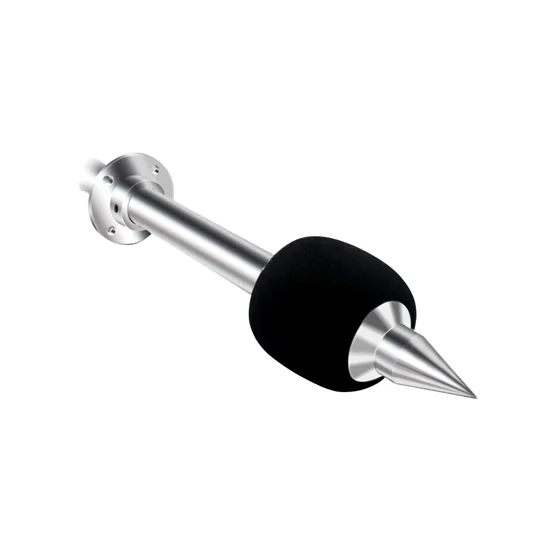
Description
Operating on 10-30VDC with minimal 0.1W power consumption, it features a versatile 485 communication interface (ModBus-RTU protocol). Noise sensor, RS485, 4-20mA, 0-5V offers a resolution of 0.1dB, measuring noise from 30dB to 130dB across a frequency range of 20Hz to 12.5kHz.
Features
- High-quality materials for the pursuit of quality, durable, high-density metal casing, waterproof and anti-corrosion, no fear of condensation.
- Wide measuring range with high sensitivity condenser microphone.
- Industrial digital detector technology: the use of digital signal processing chip, good linearity, wide dynamic range.
- High-precision noise sensor picks up a wide range of frequencies and stable signals.
Specification
| Model | ATO-RS-ZS-N01-FL |
| DC Power Supply | 10-30VDC |
| Power | 0.1W |
| Transmitter Circuit Operating Temperature | Transmitter circuit operating temperature |
| Communication Interface | 485 communication (ModBus-RTU protocol) |
| Baud rate: 2400, 4800 (default), 9600 | |
| Data bit length: 8 bits | |
| Parity check method: none | |
| Stop bit length: 1 bit | |
| Default ModBus communication address: 1 | |
| Support function code: 03 | |
| Parameter Settings | Use the provided configuration software to configure through the 485 interface |
| Resolution | 0.1dB |
| Measuring Range | 30dB~130dB |
| Frequency Range | 20Hz~12.5kHz |
| Response Time | ≤3s |
| Stability | Less than 2% during the service life |
| Noise Accuracy | ±0.5dB (at reference pitch, 94dB@1kHz) |
Dimension (Unit:mm)
Application
Tips: Why is monitoring noise important?
- Health Impact: Prolonged exposure to high levels of noise can have adverse effects on human health, including stress, hearing loss, and sleep disturbances. Monitoring noise helps identify areas with elevated noise levels and implement measures to protect public health.
- Environmental Impact: Excessive noise can negatively impact the environment, affecting wildlife, ecosystems, and the quality of outdoor spaces. Noise monitoring allows for the identification of areas where noise pollution is a concern, enabling the implementation of mitigation strategies.
- Community Quality of Life: Noise pollution can significantly affect the quality of life in residential areas. Monitoring noise levels helps communities identify sources of noise, advocate for noise reduction measures, and maintain a peaceful living environment.
Reviews
There are no reviews yet.